
We may receive a commission on purchases made from links.
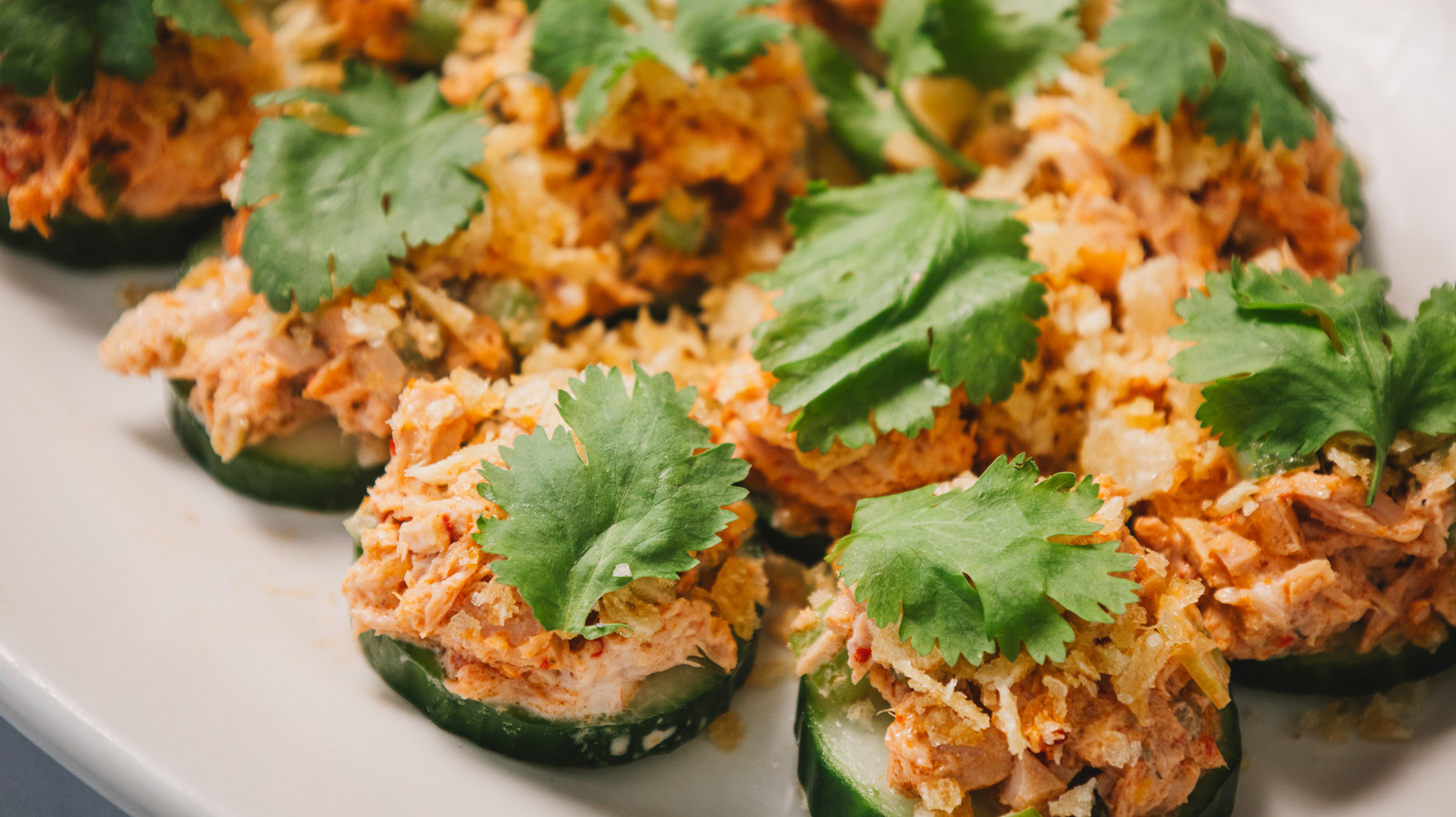
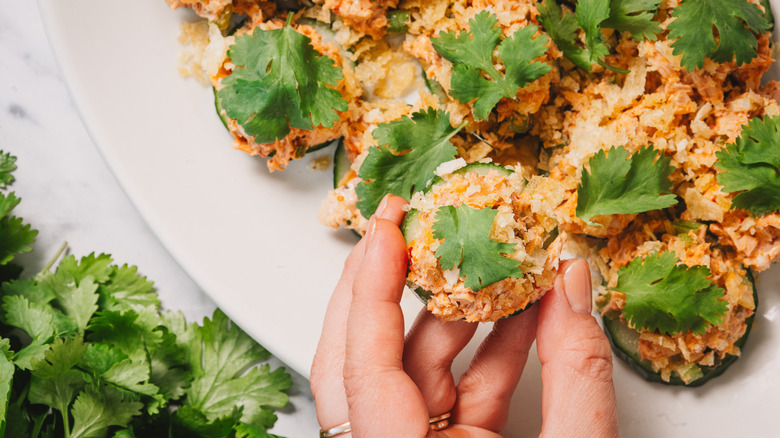
These petite Tunisian fricassé-style tuna salad bites bring inspiration from the Middle East straight into your lunch hour. They’re small, easy to eat in one bite, and perfect for a snack, an appetizer, or a light meal. But the best part about them is how they transport you to a dreamy place you might never have been to.
I still remember my first time walking through the Great Central Market of Tunis. As a recipe developer and travel blogger specializing in Middle Eastern food, everything around me served as a source of inspiration for the next dinner. But when my eyes fell on the fricassé sandwich, I stopped in my tracks. Everywhere you looked, people ate these standing up at market stalls: a small fried roll, barely bigger than your fist, split open and stuffed with tuna, harissa, preserved lemon, capers, potato, and hard-boiled egg. The smell was mesmerizing, a mixture of pickles and the deep spice of harissa. I immediately made my husband get one, which my family devoured right then and there.
At home, I headed to the kitchen nearly the same day we landed. Carefully measuring spices and mashed tuna, I wanted to make a lighter version of those flavors I loved. I researched Tunisian tuna salad, and read about the flavors of the Maghreb. I didn’t feel like making that fried bread or cooking potatoes, so I ate my little fricassé on cucumber slices, and loved every bite. And so, when tasked with the assignment to make tuna salad bites, I knew I had to go back straight to those flavors — fermented, intensely citrusy, spicy, and briny. The crushed potato chips on top were a later addition, replicating the crunch of the original bun. And just like that sandwich a few years back, as soon as I tasted these, I was stopped in my tracks.
Gather the ingredients for Tunisian fricassé-style tuna salad bites
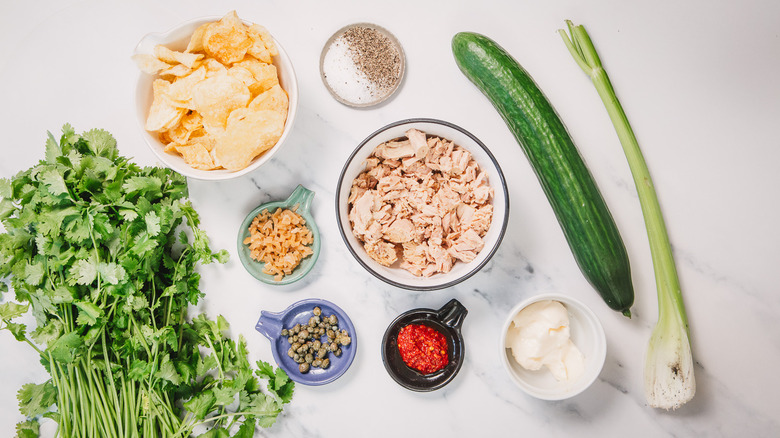
To make these salad bites, you’ll of course need tuna. For the best results, we recommend using high-quality, oil-packed tuna. It has more flavor and a better texture than water-packed. There are quite a few decent brands to choose from, so go based on your budget and availability.
The rest of the ingredients to gather are mayonnaise, harissa paste, preserved lemon, capers, celery, kosher salt, and black pepper. For assembling the bites, you’ll need English cucumber, crushed potato chips, and fresh cilantro leaves.
Step 1: Mix the tuna salad ingredients
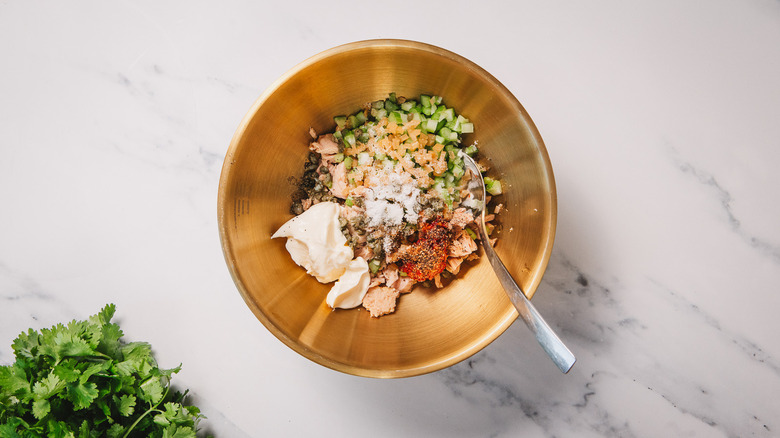
In a bowl, mix the tuna, mayonnaise, harissa paste, preserved lemon, capers, and celery.
Step 2: Season with salt and pepper
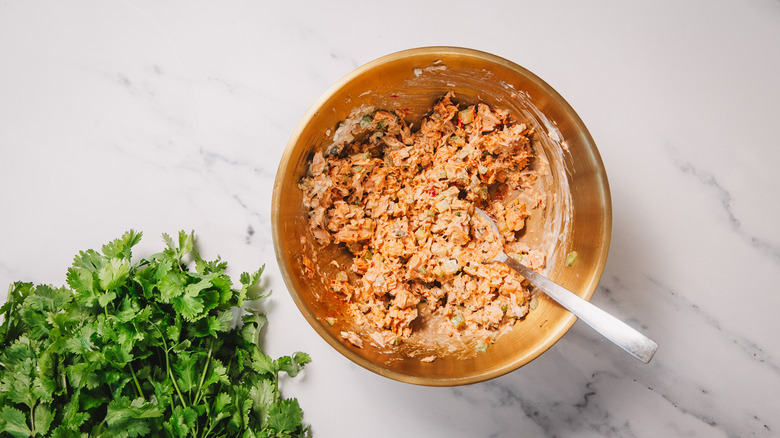
Mix gently until combined. Season with salt and pepper.
Step 3: Arrange the cucumbers on a plate
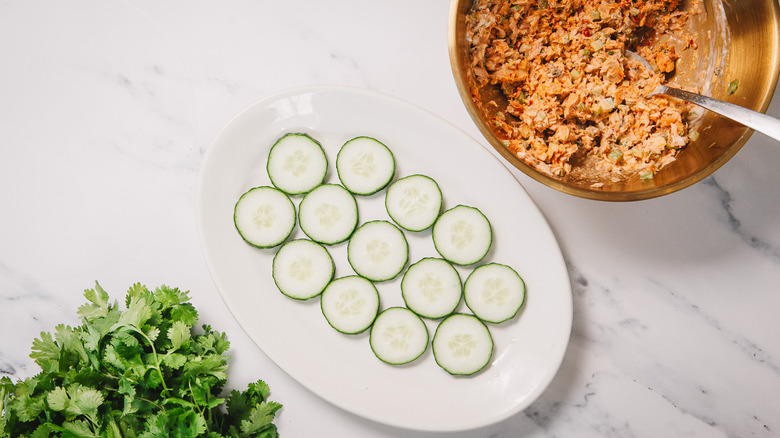
Arrange the cucumber rounds on a platter.
Step 4: Top with tuna salad
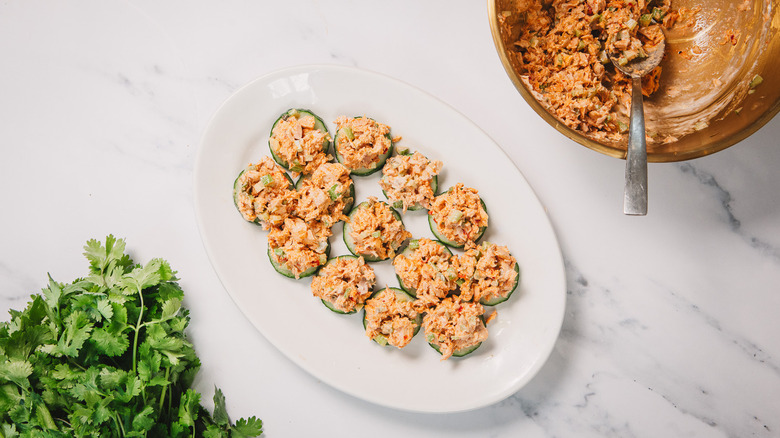
Top each round with a spoonful of the tuna salad.
Step 5: Garnish and serve the tuna salad bites
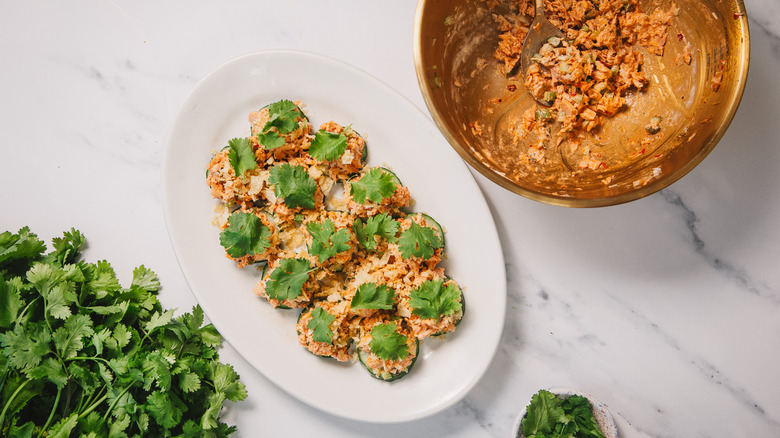
Sprinkle with crushed potato chips and garnish with a small cilantro leaf. Serve immediately so the chips stay crisp.
What are preserved lemons, why do you use the rind only, and what to do if you can’t find them?
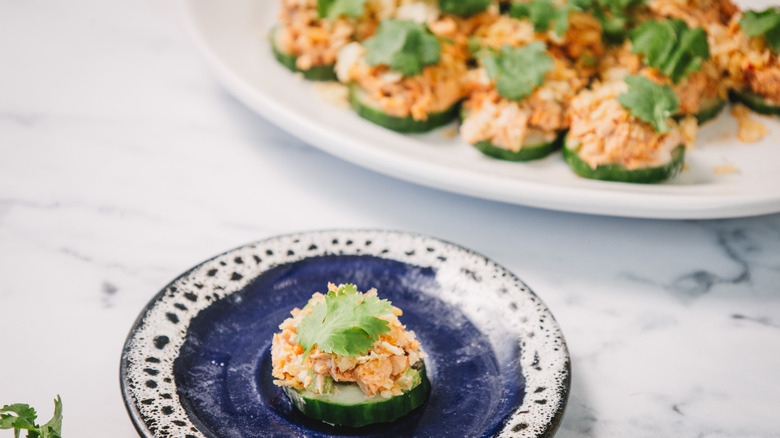
Preserved lemons are a staple in North African cooking, present in Moroccan, Tunisian, Algerian, and Libyan cuisines. If you’ve never tried them, I hope this recipe convinces you to make a permanent spot for them in your fridge.
Preserved lemons are whole lemons packed in salt and cured for several weeks, until they soften and ferment. The result is nothing like fresh lemon’s refreshing bite. Instead, they are intensely salty, funky, and smell a bit like anchovies, with a flavor that’s close to umami. You only use the rind, and even then, it’s paramount that you rinse it off before dicing it, because salt levels vary by brand.
If you can’t find these in specialty grocery stores or online — they’re conveniently available on Amazon – you can make preserved lemons at home with just salt and fresh lemons. They are not the same as Vietnamese preserved lemons, but they will also do in a pinch. If you don’t want to bother, you can substitute them with fresh lemon zest, a squeeze of juice, and some salt, but the flavor won’t be the same. I also like to add a bit of shrimp paste for a similar funk.
What is harissa and what can you substitute it with?
Harissa is a North African chile paste made with roasted red peppers, chiles, garlic, olive oil, and a host of spices like cumin, coriander, and caraway. Each brand varies in its spice levels, use of seasonings, and even texture, with some versions being thick and smokier, and others brighter and more acidic. It can be used as a condiment, a marinade base, and a seasoning, and it’s become much easier to find online or in stores.
In this recipe, we use harissa for warmth and smokiness and just a touch of heat. If you want to dial it up, start with a tablespoon and taste to see if you want to add more.
If you can’t find harissa, there are a few substitutes that could work. Sambal Oelek brings similar heat without smokiness. And in a pinch, a spoonful of tomato paste mixed with smoked paprika and red pepper flakes comes close to approximating harissa’s sweetness and body. Gochujang also works, but gives the dish a fermented note.